
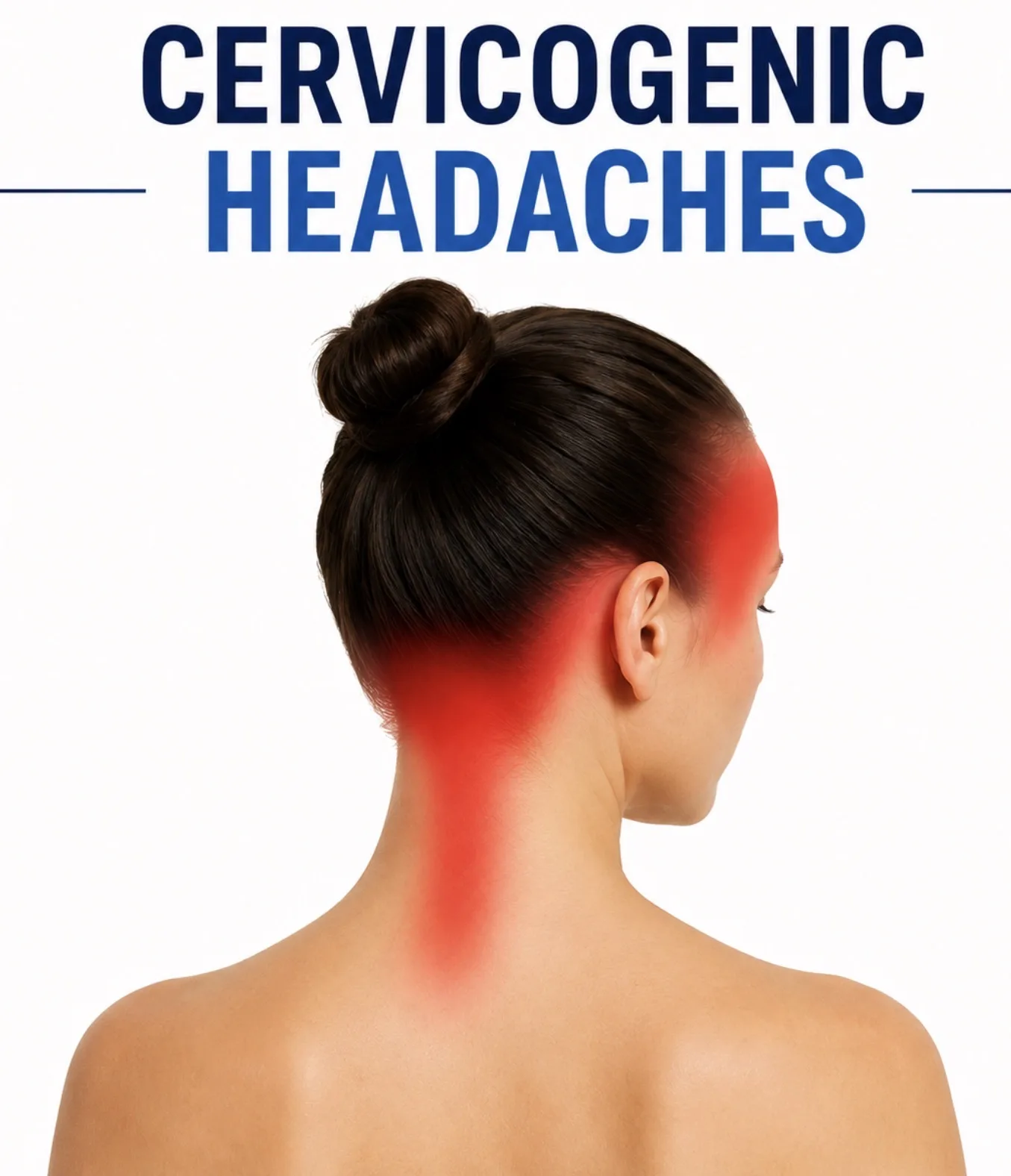
A cervicogenic headache (CGH) is a type of headache that originates from structures in the cervical spine (neck) and is felt in the head or face. It can be associated with neck pain, stiffness, restricted neck movement, and pain that may travel from the back of the head toward the forehead, temple, or around the eye.
Physiotherapy can play an important role in identifying contributing neck and musculoskeletal problems and helping improve movement, strength, and function.
What Is a Cervicogenic Headache?
A cervicogenic headache is a secondary headache, meaning the headache is caused by another underlying problem rather than being the primary disorder itself.
The pain commonly originates from structures in the upper neck, particularly the upper cervical joints, muscles, and surrounding tissues. Because nerves from the upper cervical region share connections with pathways involved in head and facial sensation, pain originating in the neck can be perceived as headache.
Common Symptoms
People with cervicogenic headaches may experience:
- Pain that starts in the neck or back of the head
- Headache mainly on one side
- Pain spreading from the back of the head toward the forehead or temple
- Pain around or behind the eye
- Neck stiffness or reduced movement
- Increased pain with certain neck movements or sustained postures
- Tenderness in the neck and upper shoulder muscles
- Headache associated with prolonged sitting or poor posture
- Reduced ability to perform normal activities because of pain
Symptoms can vary from person to person, and not every headache associated with neck pain is a cervicogenic headache.
What Causes Cervicogenic Headache?
Several factors can contribute to cervicogenic headaches, including:
1. Neck Joint Dysfunction
Problems affecting the upper cervical joints can contribute to pain and restricted movement.
2. Muscle Tension
Tight or overactive muscles around the neck and shoulder region may contribute to discomfort and altered movement.
3. Poor Posture
Long periods of sitting, working on a computer, or looking down at a phone can place prolonged stress on the neck.
4. Previous Neck Injury
Whiplash, sports injuries, falls, or other trauma may contribute to persistent neck dysfunction.
5. Reduced Neck Mobility
Limited movement of the cervical spine can affect normal neck mechanics and may contribute to headache symptoms.
6. Repetitive or Sustained Activities
Activities that keep the head and neck in one position for long periods may aggravate symptoms.
Cervicogenic Headache vs Migraine
Cervicogenic headaches and migraines can sometimes feel similar, but they are different conditions.
A cervicogenic headache is generally associated with a problem in the neck and may be influenced by neck movement or posture.
Migraine is a neurological condition and may involve symptoms such as nausea, sensitivity to light or sound, and sometimes visual disturbances.
Because different headache disorders can overlap, a proper clinical assessment is important before assuming that a headache is coming from the neck.
How Is Cervicogenic Headache Diagnosed?
Diagnosis is primarily based on a detailed history and physical examination.
A physiotherapist or healthcare professional may assess:
- Neck range of motion
- Cervical and upper thoracic movement
- Muscle strength and endurance
- Neck and shoulder muscle tenderness
- Posture and movement patterns
- Headache behavior
- Relationship between neck movement and headache symptoms
- Functional activities that aggravate or relieve symptoms
Other possible causes of headache may also need to be considered.
Physiotherapy Treatment for Cervicogenic Headache
Physiotherapy treatment is usually individualized according to the person’s symptoms and examination findings.
Manual Therapy
Appropriate hands-on techniques may be used to improve cervical and upper thoracic mobility and reduce musculoskeletal pain.
Therapeutic Exercise
Exercises may focus on:
- Deep neck flexor strength and control
- Cervical mobility
- Upper-back mobility
- Scapular control
- Neck and shoulder muscle endurance
- Postural control
Posture & Ergonomic Advice
Your physiotherapist may recommend adjustments to your workstation, sitting position, screen height, and daily habits to reduce prolonged strain on the neck.
Soft Tissue Techniques
Selected soft-tissue techniques may be used when muscle tenderness or increased muscle tone is contributing to symptoms.
Education
Understanding your headache triggers, activity patterns, posture, and exercise program can help you manage symptoms and reduce the likelihood of recurrence.
Simple Exercises That May Help
Depending on the individual assessment, a physiotherapist may recommend exercises such as:
Chin Tucks
Gently draw your head backward while keeping your eyes level. Avoid forcing the movement.
Neck Rotation
Slowly turn your head from side to side within a comfortable range.
Thoracic Extension
Gentle upper-back extension can help improve mobility when stiffness in the upper back contributes to poor neck movement.
Scapular Retraction
Gently bring the shoulder blades backward and downward without shrugging.
Exercises should be selected according to your symptoms and performed with appropriate technique. Stop an exercise if it significantly increases your symptoms.
How Can You Prevent Cervicogenic Headaches?
Some useful habits include:
- Take regular breaks from prolonged sitting.
- Avoid keeping your neck in one position for extended periods.
- Set up your workstation comfortably.
- Keep your screen at an appropriate height.
- Avoid prolonged downward-looking phone use.
- Maintain regular physical activity.
- Strengthen your neck, upper back, and shoulder muscles when appropriate.
- Pay attention to activities that repeatedly trigger your symptoms.
- Follow an individualized exercise program when recommended.
When Should You Seek Medical Attention?
Most headaches are not caused by serious conditions, but some headache symptoms require urgent medical evaluation.
Seek immediate medical attention for a sudden, extremely severe headache or a headache accompanied by symptoms such as:
- Loss of consciousness
- New weakness or numbness
- Difficulty speaking
- Significant confusion
- New vision loss
- Seizure
- High fever with severe illness
- A severe headache following significant head injury
A new or unusual headache, particularly one that is persistent or progressively worsening, should also be assessed by an appropriate healthcare professional.
Frequently Asked Questions
Is cervicogenic headache caused by the neck?
Yes. Cervicogenic headache is a secondary headache associated with structures and dysfunction in the cervical region.
Can poor posture cause cervicogenic headaches?
Prolonged or awkward postures can contribute to neck strain and may aggravate headache symptoms in some people. However, posture alone does not explain every headache.
Can physiotherapy help cervicogenic headaches?
Physiotherapy may help through individualized exercise, manual therapy when appropriate, education, and ergonomic or activity modifications.
How long does a cervicogenic headache last?
Duration varies considerably. Some episodes may be short-lived, while recurrent symptoms can persist for longer periods. The underlying cause and individual response to treatment are important factors.
Can neck exercises make the headache worse?
They can if the exercise is inappropriate, performed too aggressively, or introduced when symptoms are not ready for that level of activity. Exercises should be progressed gradually and adjusted according to symptoms.
Is cervicogenic headache the same as migraine?
No. They are different headache disorders, although some symptoms can overlap. A healthcare professional can help determine which type of headache is most likely.
Final Takeaway
A cervicogenic headache is a headache associated with the cervical region, and symptoms may include neck pain, stiffness, restricted movement, and pain referred into the head.
The most appropriate treatment depends on the underlying cause. A thorough assessment followed by an individualized physiotherapy program can help address contributing factors such as restricted mobility, muscle weakness, poor movement control, and activity-related strain.
If you regularly experience headaches with neck pain or stiffness, consider getting an appropriate clinical assessment rather than treating the headache alone.