Treatments
77 views
Dry Needling vs Acupuncture: What's the Difference?
Both use needles, but dry needling and acupuncture are fundamentally different treatments. Here's what you need to know.
Medically reviewed by Dr. Sandeep Kumar Verma, BPT
8.5+ years clinical experience · NDT-Bobath certified
· June 14, 2026
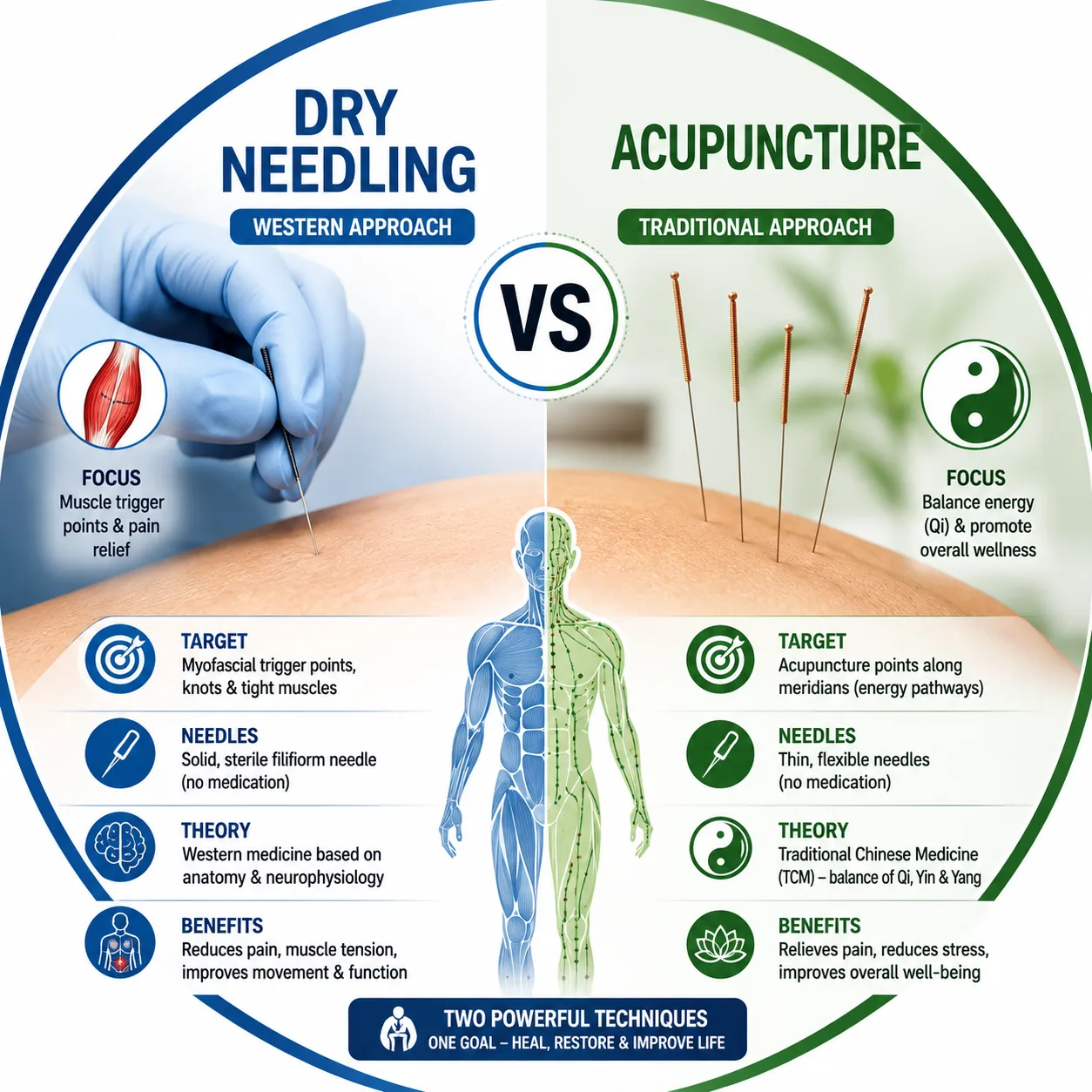
Dry needling targets muscle trigger points using Western anatomy and neuroscience to relieve musculoskeletal pain. Acupuncture is based on Traditional Chinese Medicine, targeting energy meridian points. Both use thin needles but for different purposes — dry needling is performed by physiotherapists specifically for muscle and joint pain.
Key Takeaways
- Dry needling targets muscle trigger points based on Western anatomy.
- Acupuncture targets meridian points based on Traditional Chinese Medicine.
- Dry needling is performed by physiotherapists; acupuncture by TCM practitioners.
- Both can be effective — the right choice depends on your condition.
Benefits
Provides fast, targeted relief for muscle knots and tension.
Can reduce reliance on pain medication.
Choosing the right technique for your condition improves treatment outcomes.
Frequently Asked Questions
You may feel a brief muscle twitch or mild ache when the needle reaches a trigger point, but the sensation is usually brief and well-tolerated.
Many patients feel relief after 1–3 sessions, though chronic conditions may need an ongoing plan as part of a broader physiotherapy programme.
Yes, when performed by a qualified physiotherapist using sterile, single-use needles. Side effects are typically mild, such as brief soreness at the injection site.
It depends on the underlying cause. Dry needling is often preferred for isolated muscle trigger points, while acupuncture may suit broader pain or wellness goals. Your physiotherapist can advise which fits your condition.
Medical Disclaimer: This article is for general educational purposes only and does not constitute medical advice, diagnosis, or treatment. Every patient's condition is different — please consult Dr. Sandeep Kumar Verma or another qualified healthcare professional for an assessment specific to your situation before starting any treatment or exercise programme.